Traditional Owners contribute to development of YMAC’s upcoming TEK survey guidelines
Posted: December 15th, 2025
YMAC’s Land and Sea Management (LSM) team, in collaboration with Pilbara ethnobotanist Vicki Long & Associates (VLA), has been working on the development of Traditional Ecological Knowledge (TEK) survey technical guidance.
The project aims to provide clarity and improve both the consistency and quality in TEK reports being produced. When published, the guidance will act as a standard framework for the design and scoping of TEK surveys in the context of the Environmental Protection Authority’s Social Surroundings requirement during the Environmental Impact Assessment process.
Social Surroundings surveys in the context of Aboriginal communities usually entail the assessment of First Nations values and concepts, such as the notion of Country, bush tucker, bush medicine, mythological features of the landscape, water flows, or song lines. These surveys require specific expertise to capture information related to ethno-botany and other traditional ecological knowledge (TEK).
Through producing guidelines for the design and scoping of Traditional Ecological Knowledge surveys, YMAC is aiming to address the existing disconnect between First Nations values and priorities and the requirements of the environmental approvals process (typically based on western science).
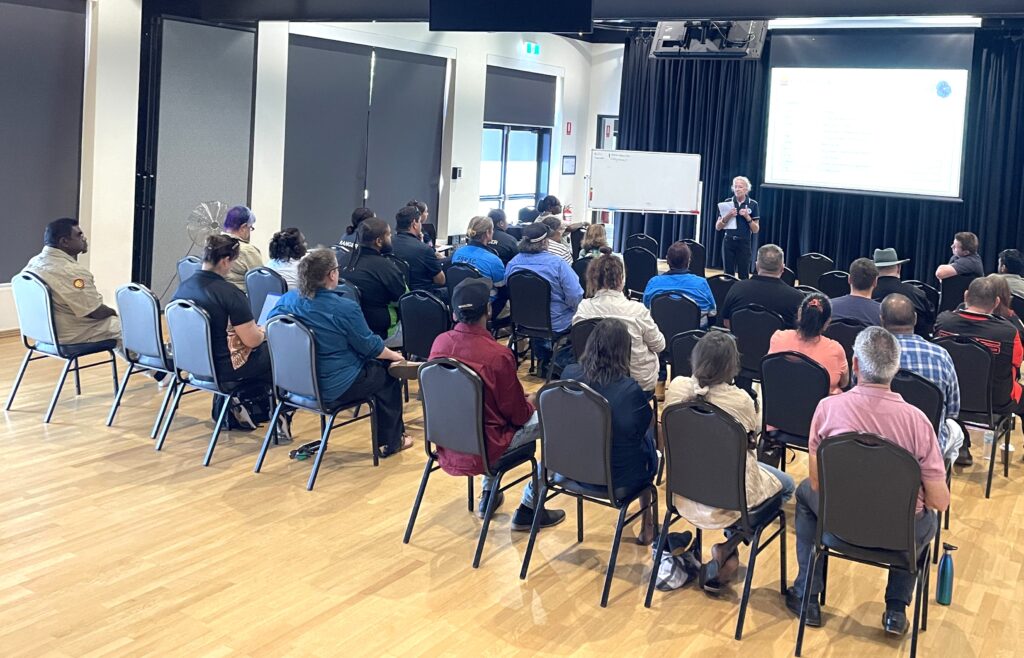
Because we believe it important the process to capture the cultural knowledge to inform the guidelines comes from a grassroots approach and considers cultural protocols, YMAC’s LSM team recently organised a workshop in Karratha. Traditional Owners from 10 different Pilbara groups joined us, sharing valuable insights, raising key questions, and helping to identify essential inclusions for the guidelines.
YMAC thanks all the workshop participants for sharing their knowledge. Outcomes include promoting the adoption of a methodology respecting the principles and values of First Nations communities during the environmental assessment process, while fostering improved engagement between industry proponents and Aboriginal communities impacted by project developments.
The guidelines are currently being developed, with an aim to be finalised in 2026.
This project is supported by funding from the Western Australian Government’s State NRM Program. Find out more about the NRM program at https://bit.ly/StateNRM